
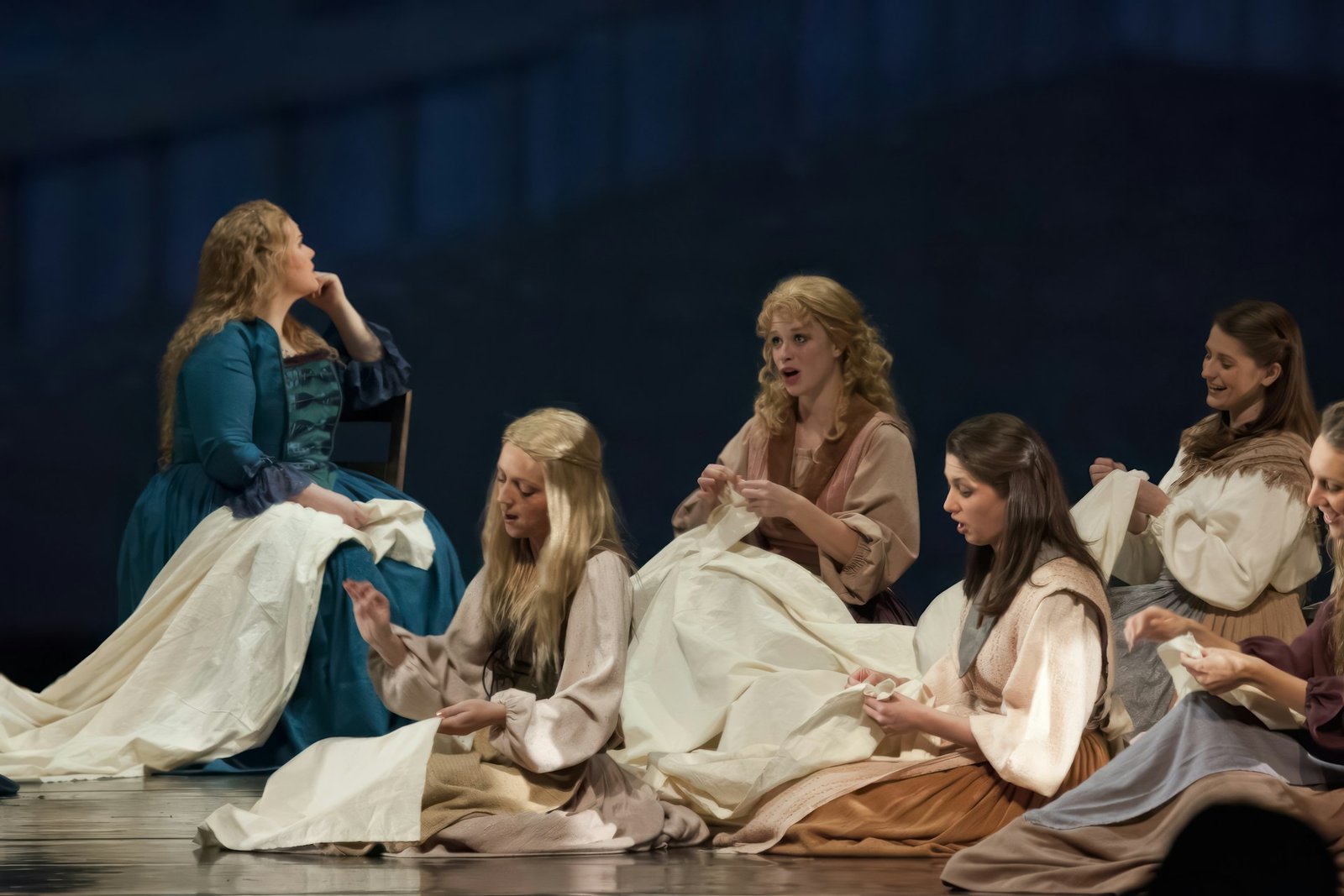
One of the first things you’ll notice when you start listening to opera is how different singers can sound.
Some voices seem impossibly high and bright. Others are deep, powerful and almost thunderous. Some have a warm, rich quality, while others can cut through a full orchestra with remarkable clarity.
These aren’t simply differences in singing style. Opera singers are traditionally classified into different voice types, based largely on vocal range, color, weight and the roles they are suited to perform.
Once you understand the basic voice types, listening to opera becomes even more interesting. You’ll start recognizing why a particular singer is perfect for a certain role and why composers write some characters for particular kinds of voices.
So let’s break it all down.
The Main Opera Voice Types
The traditional categories you’ll encounter most often are:
Female voices
- Soprano
- Mezzo-soprano
- Contralto
Male voices
- Countertenor
- Tenor
- Baritone
- Bass
There are also several specialized classifications within these groups. A soprano, for example, might be described as a lyric soprano, dramatic soprano or coloratura soprano.
But don’t worry about all those terms yet.
For a beginner, understanding the seven principal voice types is the best place to start.
What Is a Soprano?
The soprano is generally the highest standard female voice type.
Sopranos often sing the leading female roles in opera, although this isn’t always the case. Their voices can range from delicate and youthful to extraordinarily powerful.
Depending on the role, a soprano may portray a young heroine, a queen, a tragic lover or even a supernatural character.
Some famous soprano roles include:
- Violetta in La Traviata
- Mimì in La Bohème
- Tosca in Tosca
- Cio-Cio-San in Madama Butterfly
- The Queen of the Night in The Magic Flute
The soprano voice is particularly associated with some of opera’s most famous arias.
If you’ve ever heard an opera singer soar into an extremely high note, there’s a good chance you’re listening to a soprano.
What Is a Mezzo-Soprano?
A mezzo-soprano sits below the soprano in range.
The word “mezzo” essentially means “middle,” which gives you a useful clue about where this voice sits.
Mezzo-sopranos tend to have a darker, warmer and richer sound than sopranos.
They frequently portray mothers, older women, villains, passionate lovers or characters written as younger men.
That last category may seem surprising.
Opera has a long tradition of trouser roles, in which a female singer portrays a male character. Cherubino in Mozart’s The Marriage of Figaro is one of the most famous examples.
Other well-known mezzo roles include:
- Carmen in Carmen
- Rosina in The Barber of Seville
- Dorabella in Così fan tutte
- Amneris in Aida
Mezzo-sopranos are often incredibly versatile performers because their voices can move between tenderness, drama and enormous intensity.
What Is a Contralto?
The contralto is the lowest traditional female voice type.
True contraltos are relatively uncommon, which makes the voice particularly distinctive.
A contralto often has a deep, dark and resonant quality that can immediately stand out from other female voices.
Some opera roles written for lower female voices overlap with mezzo-soprano repertoire, so you’ll sometimes encounter discussion about whether a particular singer is a contralto or a mezzo-soprano.
The important thing for a newcomer is simply to listen for that unusually rich lower register.
What Is a Tenor?
The tenor is generally the highest standard male voice type.
Tenors frequently portray young heroes, romantic leads and passionate characters.
Opera history is filled with legendary tenors because the combination of a powerful male voice and soaring high notes can be one of the most thrilling sounds in opera.
Famous tenor roles include:
- Rodolfo in La Bohème
- Alfredo in La Traviata
- Cavaradossi in Tosca
- Don José in Carmen
- Calaf in Turandot
One of the most famous tenor arias in the entire repertoire is “Nessun dorma” from Puccini’s Turandot.
Even people who have never watched a complete opera often recognize it.
What Is a Baritone?
The baritone sits between the tenor and bass.
It is one of the most versatile male voice types in opera.
Baritone characters can be heroes, villains, fathers, friends, rivals, comic figures or tragic figures.
Some famous baritone roles include:
- Figaro in The Barber of Seville
- Rigoletto in Rigoletto
- Germont in La Traviata
- Scarpia in Tosca
- Don Giovanni in Don Giovanni
The baritone voice can be particularly expressive because it occupies a middle range while still possessing considerable power.
What Is a Bass?
The bass is the lowest standard male voice type.
A great bass can produce notes that seem to come from somewhere beneath the stage.
Bass roles are often associated with authority figures, kings, fathers, priests, villains and supernatural characters, although opera composers have used the voice for virtually every kind of personality.
Famous bass roles include:
- Sarastro in The Magic Flute
- King Philip in Don Carlo
- Boris Godunov in Boris Godunov
- Commendatore in Don Giovanni
The bass can bring tremendous weight and drama to an opera.
What Is a Countertenor?
The countertenor is perhaps the voice type that surprises newcomers most.
Countertenors are male singers who use highly developed vocal techniques to sing in a very high register, often overlapping with the ranges traditionally associated with female voices.
The voice is particularly prominent in Baroque opera and music.
Countertenors frequently perform works by composers such as Handel, although modern composers also write music specifically for the voice.
The sound can be haunting, ethereal and remarkably beautiful.
Why Do Voice Types Matter?
You might wonder why opera needs all these categories in the first place.
The answer is storytelling.
Composers use different voices to help audiences understand characters.
A young romantic hero might be written for a tenor.
A powerful older father might be written for a bass.
A passionate heroine might be a soprano.
A seductive or mysterious character might be written for a mezzo-soprano.
The voice itself becomes part of the storytelling.
Voice Type Isn’t Just About Range
This is an important point for beginners.
You cannot determine a singer’s voice type simply by asking, “How high can they sing?”
Opera classification also considers:
- Vocal color
- Vocal weight
- Power
- Agility
- Resonance
- The part of the range where the voice is most comfortable
Two singers might be capable of reaching the same note while belonging to completely different voice categories.
That’s why professional voice classification can be much more complicated than simply looking at a chart of musical notes.
What Are Lyric and Dramatic Voices?
Once you become more familiar with opera, you’ll encounter additional descriptions such as lyric, dramatic and coloratura.
These describe characteristics of the voice rather than simply its basic range.
Lyric
A lyric voice tends to be lighter, smoother and more flexible.
It is often ideal for romantic or youthful characters.
Dramatic
A dramatic voice generally has greater weight and power.
These singers may be required to project over large orchestras during intense scenes.
Coloratura
Coloratura refers to highly agile singing involving rapid passages, ornamentation and very high notes.
The famous Queen of the Night role in Mozart’s The Magic Flute is a classic example of coloratura writing.
Some singers combine these qualities. A singer might therefore be described using more than one classification.
Can a Singer’s Voice Type Change?
A singer’s voice can develop significantly over the course of a career.
Young singers may begin with lighter repertoire and gradually move toward heavier roles as their voices mature.
This is one reason singers don’t necessarily sing the same types of roles throughout their entire careers.
A role that is appropriate for a singer at 25 may not be appropriate at 45, and vice versa.
Experienced opera listeners often enjoy following a singer’s development over many years.
How to Identify Voice Types When Listening
You don’t need to be a trained musician.
Start with broad impressions.
Very high female voice: probably soprano.
Lower, warmer female voice: possibly mezzo-soprano or contralto.
High male voice: probably tenor or countertenor.
Middle male voice: probably baritone.
Very low male voice: probably bass.
With time, your ear will become more familiar with the differences.
And don’t worry if you’re wrong.
Part of the fun of discovering opera is learning to listen more closely.
How to Watch an Opera for the First Time
A Simple Opera Voice Chart
| Voice Type | General Range | Typical Character |
|---|---|---|
| Soprano | Highest female | Heroine, young woman, queen |
| Mezzo-Soprano | Middle female | Lover, mother, villain, young man |
| Contralto | Lowest female | Mature, powerful or unusual characters |
| Countertenor | Very high male | Often Baroque or specialized roles |
| Tenor | Highest standard male | Hero, romantic lead |
| Baritone | Middle male | Hero, father, rival, villain |
| Bass | Lowest male | King, father, authority figure, villain |
These are broad descriptions rather than rigid rules.
Listen for the Character, Not Just the Note
The easiest way to appreciate voice types is to stop thinking of them as technical categories and start thinking about what each voice contributes to the drama.
A soprano’s high notes might express desperation.
A bass may give an entrance a feeling of authority.
A baritone might sound conflicted or threatening.
A mezzo-soprano may bring warmth, sensuality or ambiguity.
The composer isn’t simply choosing voices because they sound good.
The voice becomes part of the character.
Final Thoughts
Understanding opera voice types opens another door into the art form.
Once you know the difference between a soprano and mezzo-soprano, or a tenor and baritone, you’ll begin hearing performances differently. You’ll notice why certain roles suit particular singers and how composers use voices to shape their characters.
You don’t need to memorize every classification.
Start with the basics:
Soprano. Mezzo-soprano. Contralto. Countertenor. Tenor. Baritone. Bass.
The Basic Structure of an Opera Explained
Then listen.
The more opera you hear, the easier these voices become to recognize.
And eventually, you may find yourself hearing a singer walk onto the stage and thinking, That’s a tenor—before the first line has even finished.
Frequently Asked Questions
What is the highest female opera voice?
The soprano is generally the highest standard female voice type.
What is the highest male opera voice?
The tenor is generally the highest standard male voice type, although countertenors can sing considerably higher using specialized technique.
What is the lowest opera voice?
The bass is the lowest standard male voice type. The contralto is the lowest traditional female voice type.
Is a mezzo-soprano the same as a contralto?
No. A mezzo-soprano generally sits above the contralto. The two can sometimes share repertoire, but they are distinct voice classifications.
Why are some men able to sing very high?
Countertenors develop specialized vocal techniques that allow them to sing in a high register traditionally associated with female voices.
Can a singer change voice type?
A singer’s voice can mature and develop over time, and their repertoire may change accordingly. However, voice classification is based on several characteristics, not simply age.
Photo by Carol Highsmith’s America on Unsplash
Internal Linking Checklist
✅ Add now
Link to:
What Is Opera? A Complete Beginner’s Guide
Suggested placement: the opening section or the section “What Makes an Opera?”
How to Watch an Opera for the First Time
Suggested placement: the section “How to Identify Voice Types When Listening.”
⏳ Link when future articles are published
- The Basic Structure of an Opera Explained
- Best Operas for Beginners
- Common Opera Terms Every Beginner Should Know
- Beginner’s Guide to Mozart Operas
- Beginner’s Guide to Verdi Operas
- Beginner’s Guide to Puccini Operas
- Greatest Opera Arias
- Great Singers of Opera
- Soprano Singers
- Tenor Singers
- Baritone Singers
2 thoughts on “Understanding the Different Opera Voice Types: A Beginner’s Guide”